REI Co-op
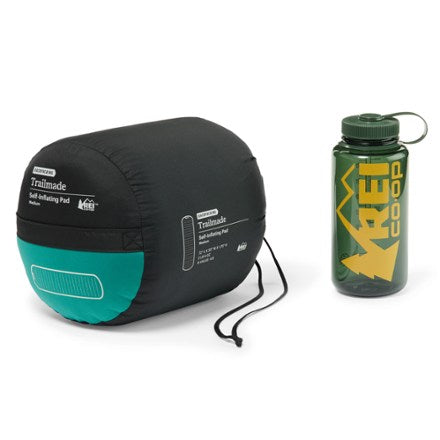
REI Co-op Trailmade Self-Inflating Sleeping Pad
REI Co-op Trailmade Self-Inflating Sleeping Pad
Couldn't load pickup availability
1 in stock
Ready to rest beneath the stars? This self-inflating REI Co-op sleeping pad is light enough for backpacking yet plenty plush for campground stays. It offers comfort, support and warmth on cool nights.
Key Features
| Best Use | Backpacking, Camping |
| Sleeping Pad Type | Self-inflating |
| Sleeping Pad Shape | Rectangular |
| Insulated | Yes |
| Insulation Type | Open-cell Foam |
| R-Value | 4.6 |
| Repair Kit Included | Yes |
| Stuff Sack Included | Yes |
| Packed Size | Short: 7.5 x 10.5 inches; Medium: 8 x 11 inches; Medium Wide: 8.5 x 13.5 inches; Long Wide: 8.5 x 14 inches |
| Sleeping Capacity | 1-person |
| Pad Thickness (in.) | 1.5 inches |
| Dimensions | Short: 66 x 20 x 1.5 inches; Medium: 72 x 20 x 1.5 inches; Medium Wide: 72 x 25 x 1.5 inches; Long Wide: 78 x 25 x 1.5 inches |
| Weight | Short: 1 lb. 15 oz.; Medium: 2 lbs. 1 oz.; Medium Wide: 2 lbs. 9 oz.; Long Wide: 2 lbs. 12 oz. |
| Gender | Unisex |
| Sustainability | Contains recycled materials; From a Climate Label Certified brand |
Highlights
- Die-cut foam design (updated from previous version) shaves weight and reduces bulk
- Inclusive sizing lets you find the size that is right for you
- Durable 75-denier recycled polyester fabric for years of use
- Separate, color-coded valves for inflation and deflation make setting up and breaking camp frustration-free
- This pad has an R-value of 4.6, which makes it suitable for adventures in cold weather; it provides considerable insulation from ground temperature
- Most sleeping pads we sell range from 1.0 (good for warm weather) to 5.5+ (for use in extreme cold); the higher the R-value, the more insulated the pad
- R-value tested according to the ASTM F3340 standard
- Repair kit included—because we want your pad to last you for years of comfortable nights under the stars
- Also includes stuff sack and compression straps for easy storing and packing
- REI Co-op brand is certified to The Climate Label; we actively fund efforts to reduce carbon emissions across our business and support climate projects around the world
Videos
Better gear is built together. From feedback to field testing, all of our gear is dialed-in by REI Co-op members. Their adventures informed every stitch and detail—making for better, longer-lasting gear.
Where will you use the pad?
Decide how you’ll use the pad. Weight and packability will matter more if you're backpacking than if you're car camping. If you're winter camping, pick an insulated pad with warmth (or a high R-value).
What are the different types of sleeping pads?
Air pads: Pros: Comfortable, lightweight and packable. Cons: Generally more expensive, and can be punctured or ripped. Self-inflating pads: A combo of open-cell foam and air. Pros: Often quite warm. Made in a variety of thicknesses and styles. Cons: Heavier than a simple foam pad. Closed-cell foam pads: Pros: Cheapest option. Almost indestructible. Cons: Not super comfortable.
Decide on the warmth (R-value) you need
Sleeping pads are rated by R-value; a higher number means more insulation. Match your choice to the season and weather. Pads with an R-value less than 2.0 are suitable for warm weather whereas those with an R-value 5.5 and greater are ideal for extreme-cold-weather.
What dimension do you need?
Pads vary by weight, cushioning, length, width, ease of inflation and more. At a minimum, your shoulders and hips need to fit on a pad. Regular (typically 72 inches long) and long (typically 78-inch) pads will insulate your legs and feet. A short or 3/4-length pad (usually 47 or 48 inches) weighs less and packs smaller.
Share